
Turning language into games
Context
Our team was asked to explore how AI could enable player-driven game creation. The challenge was turning an abstract capability into an intuitive, player-facing experience.
My role
Partnering closely with a designer, I conceptualized and articulated how the experience would function, defining the interaction model and developing the language and scenarios that made the vision tangible.
Guiding first-time creators
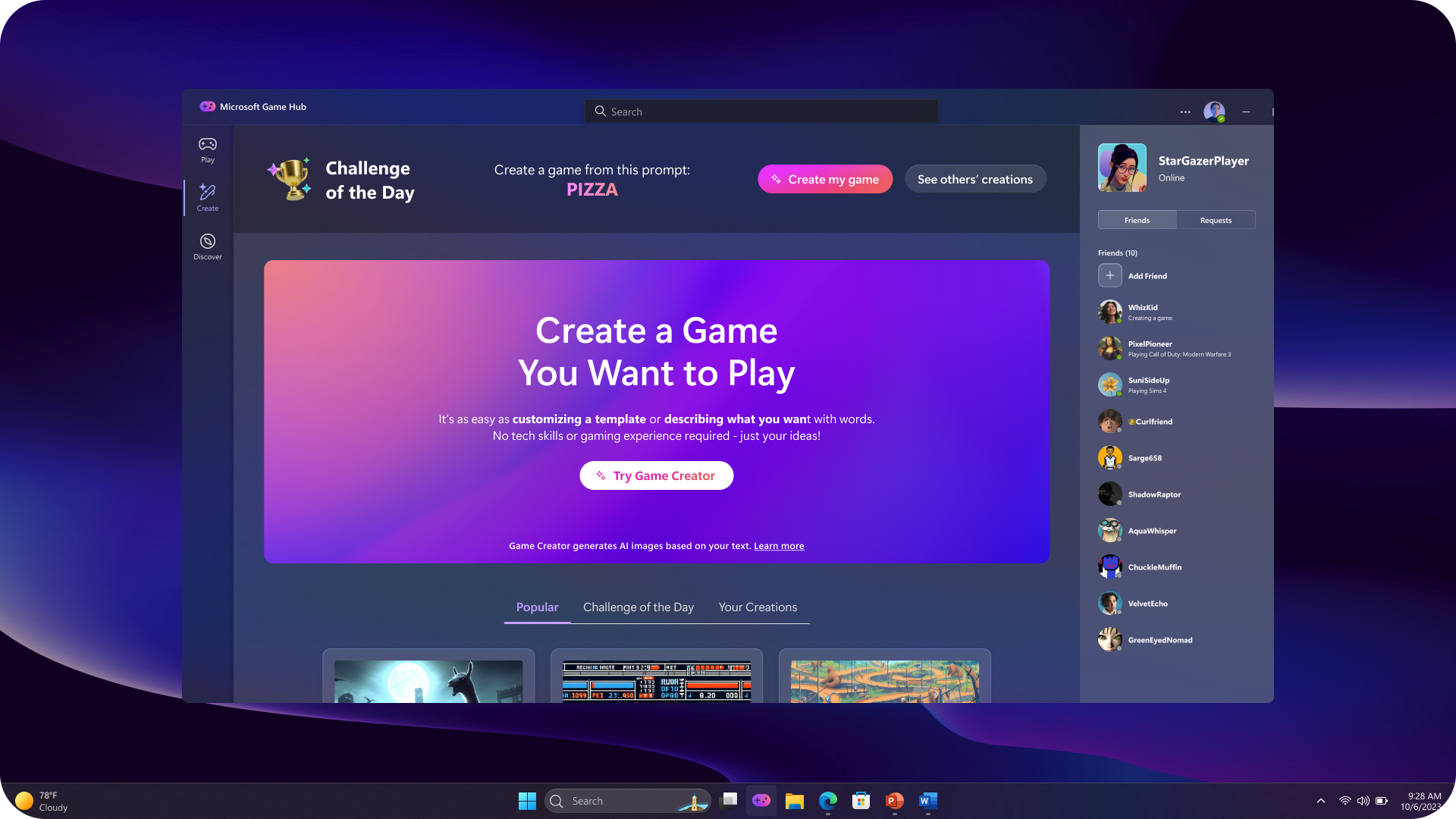
The content needed to make a complex capability feel simple and approachable, clearly explaining how players could generate a game using language while keeping the experience exploratory and inspiring.
I focused on lowering the barrier to entry and reducing intimidation. The language emphasized creativity over technical skill, clarified what would happen after a prompt was submitted, and encouraged experimentation over perfection.
Prompts and instructional copy functioned as the primary interaction layer, guiding players through game creation and making the system feel responsive and safe to explore.
From creation to community
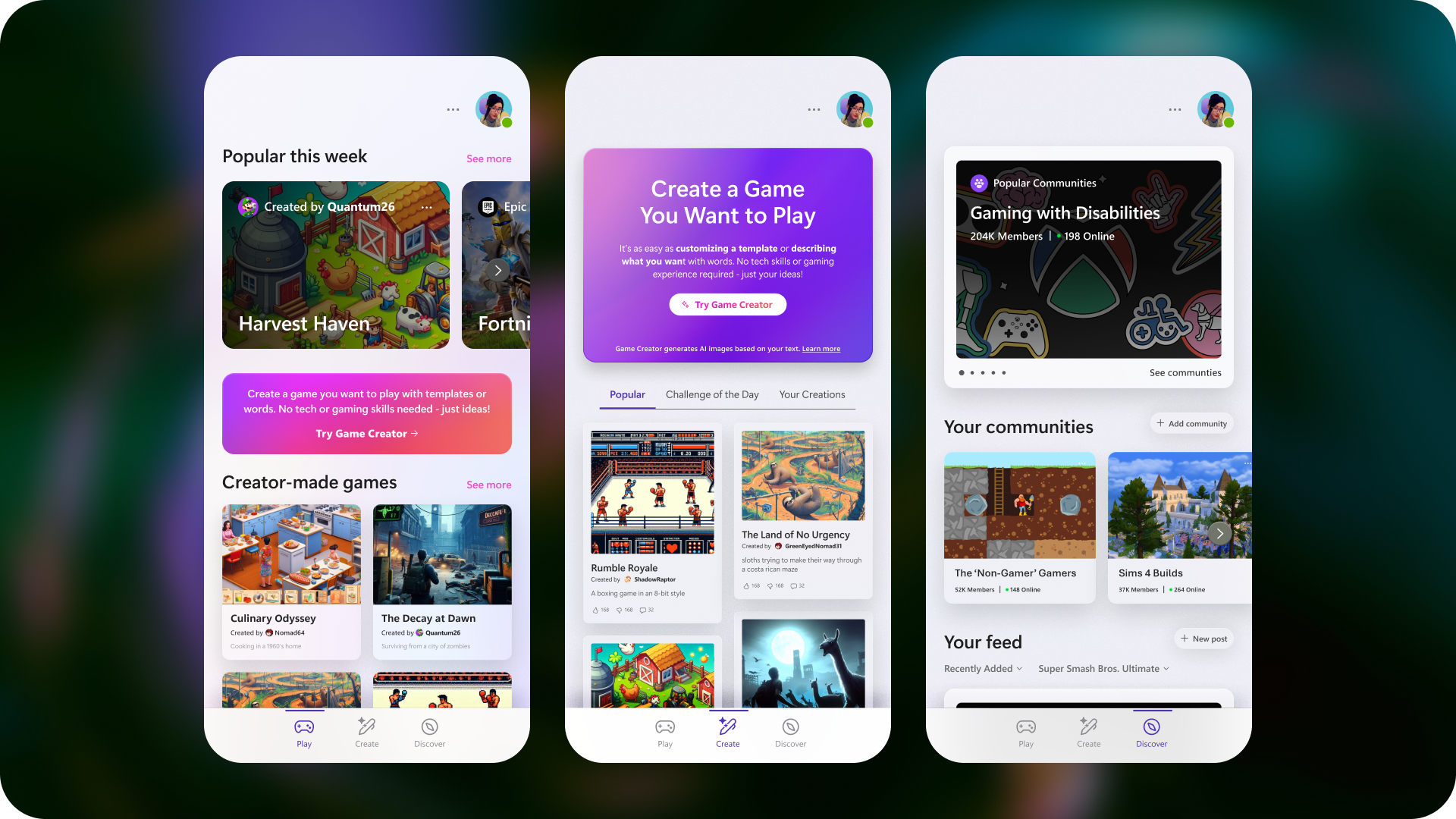
Because mobile was critical for accessibility and reach, the experience needed to feel lightweight and intuitive while still supporting deeper engagement through community and discovery.
I defined how creation, play, and community connected within a single experience, developing the interaction model and writing all in-product copy, creator prompts, community labels, and example game titles to demonstrate how identity and discovery would function in practice.
The work established a cohesive language system across creation, exploration, and social participation, ensuring the experience felt playful, clear, and scalable.
Game on
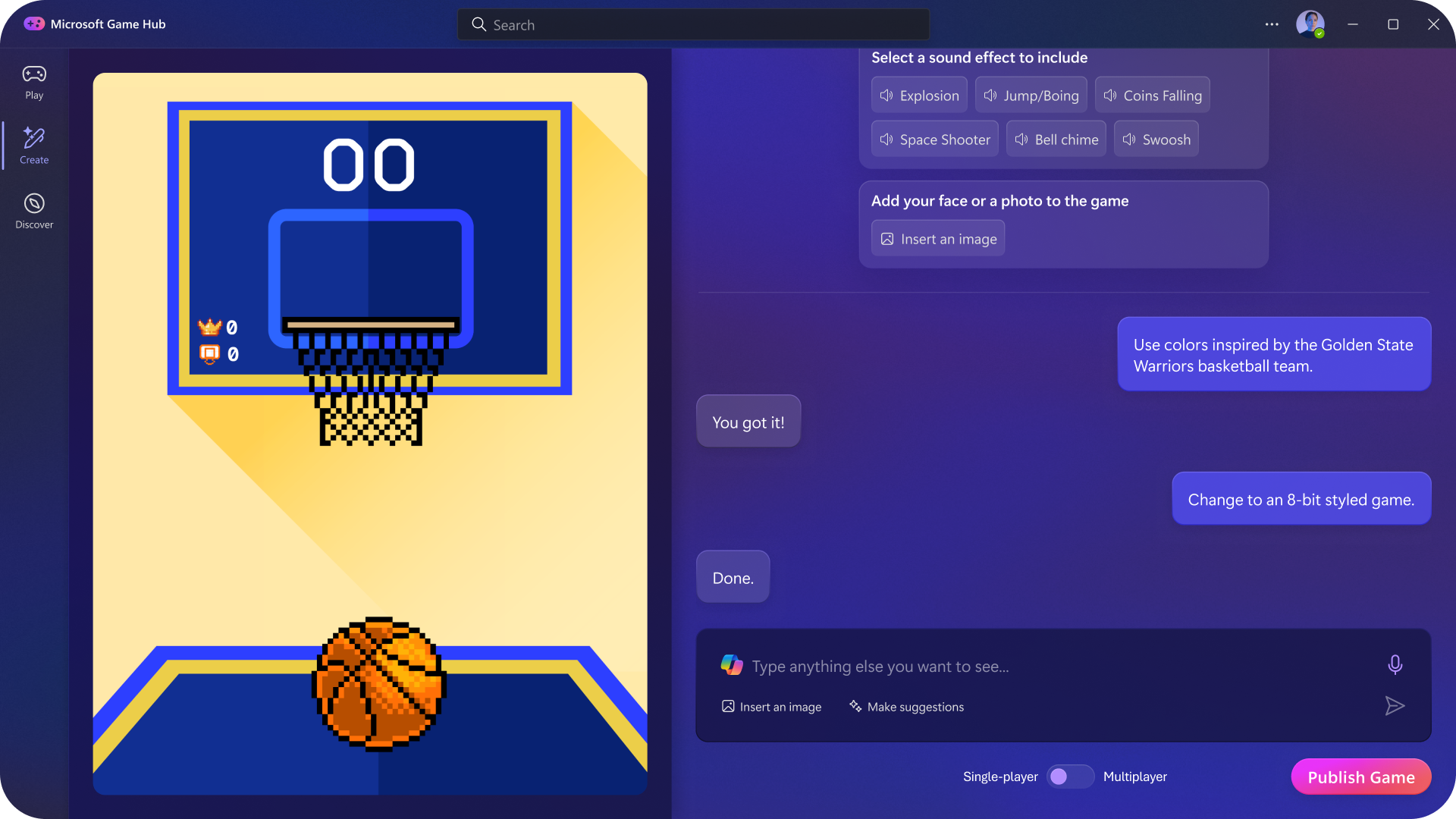
This screen showed how players could start from a template and refine their game through conversational edits. Rather than navigating technical settings, users described changes in natural language and saw updates in real time.
Starter templates reduced blank-page friction, while prompt patterns guided revisions. Instructional and conversational copy clarified what could change, how to request it, and what to expect from the system.
The language guided exploration while setting clear expectations, helping players experiment with confidence.
Impact
The project transformed a broad AI exploration into a coherent product direction. By grounding the vision in real prompts, flows, and in-product language, the concept became something teams could evaluate, critique, and build upon.